PAST
In my bachelor in Industrial Design, I worked on several projects within New Futures Squad. I focused on user centered design, usability, and interaction, often aimed at improving comfort and convenience in contexts such as smart home systems. In my Final Bachelor Project, I created a beer tasting experience that allowed me to explore interaction and materiality. During this phase, design mainly functioned as a tool to create engaging experiences and intuitive interactions, with limited attention to broader social or cultural contexts.
During my master, this focus shifted from exploring smart home systems to connecting with people from different backgrounds. Through traveling and conversations, I became aware of my own privileged position and of the realities that exist outside my social bubble. This sparked my interest in how design can bridge social bubbles and bring different perspectives together. As a result, I moved toward more socially oriented projects in which I give users a central voice and avoid filling in their experiences for them. Through this approach, I developed interviewing and observational skills and learned how to engage with sensitive topics in an open and respectful way.
Through the Design for Social Innovation course, I was introduced to ethnography as a design method. Combined with my background in film, this evolved into a practice of visual ethnography within design. Film became a way to capture context and emotion, shaping my current practice where user and society guide creative design decisions.
PRESENT
VISIBLE
User and Society
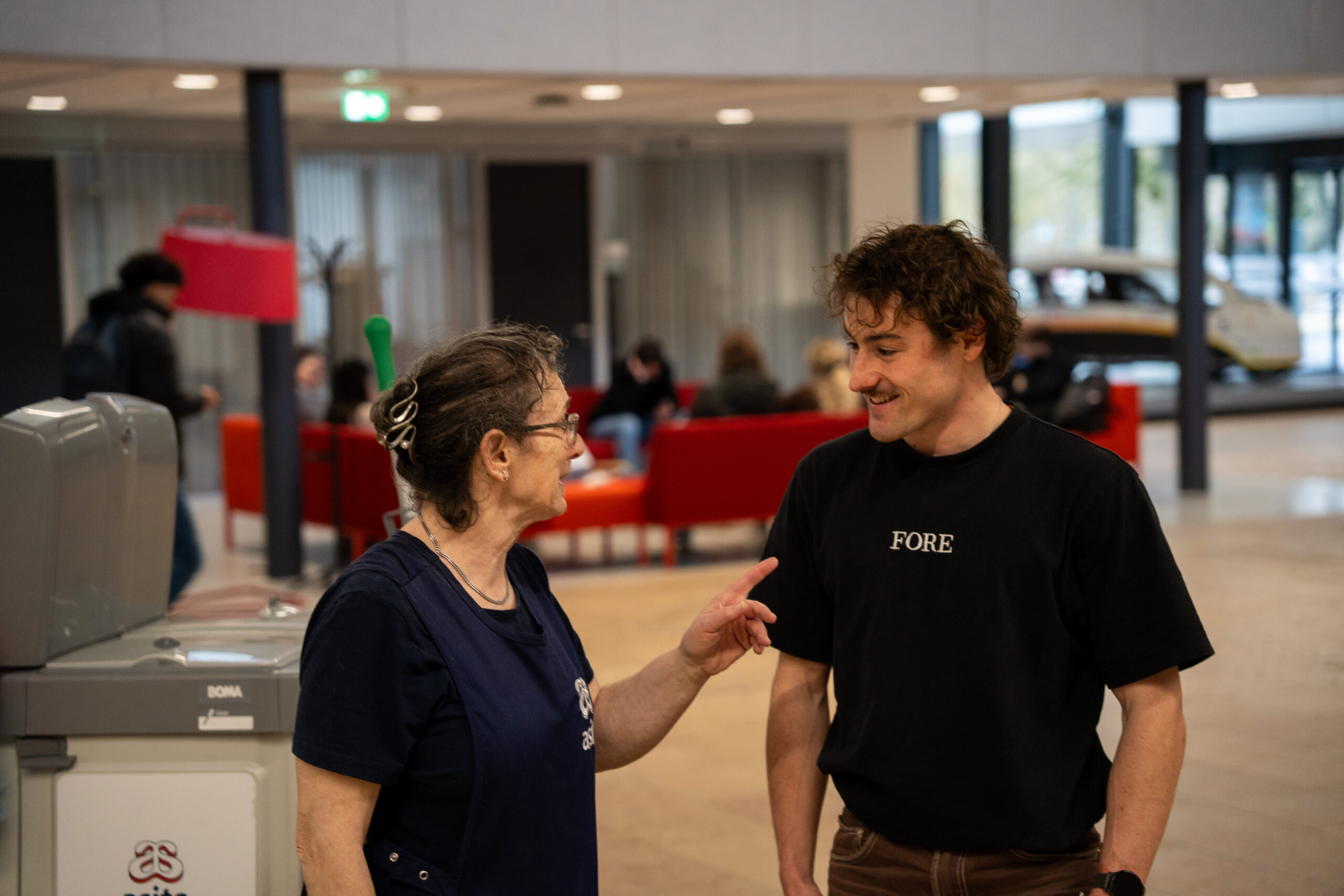
I see design as a way to understand people in context and to create situations where new perspectives can emerge. This focus developed through practice in projects such as De Familie van Gestel, where I learned to position users as active participants by spending time in their environment and listening before intervening. Through this process, I developed my interviewing skills and learned how to build trust by giving people space to share their experiences. This shift showed me that meaningful insights come from attention, patience, and a genuine interest in people and their stories.
Creativity and Aesthetics
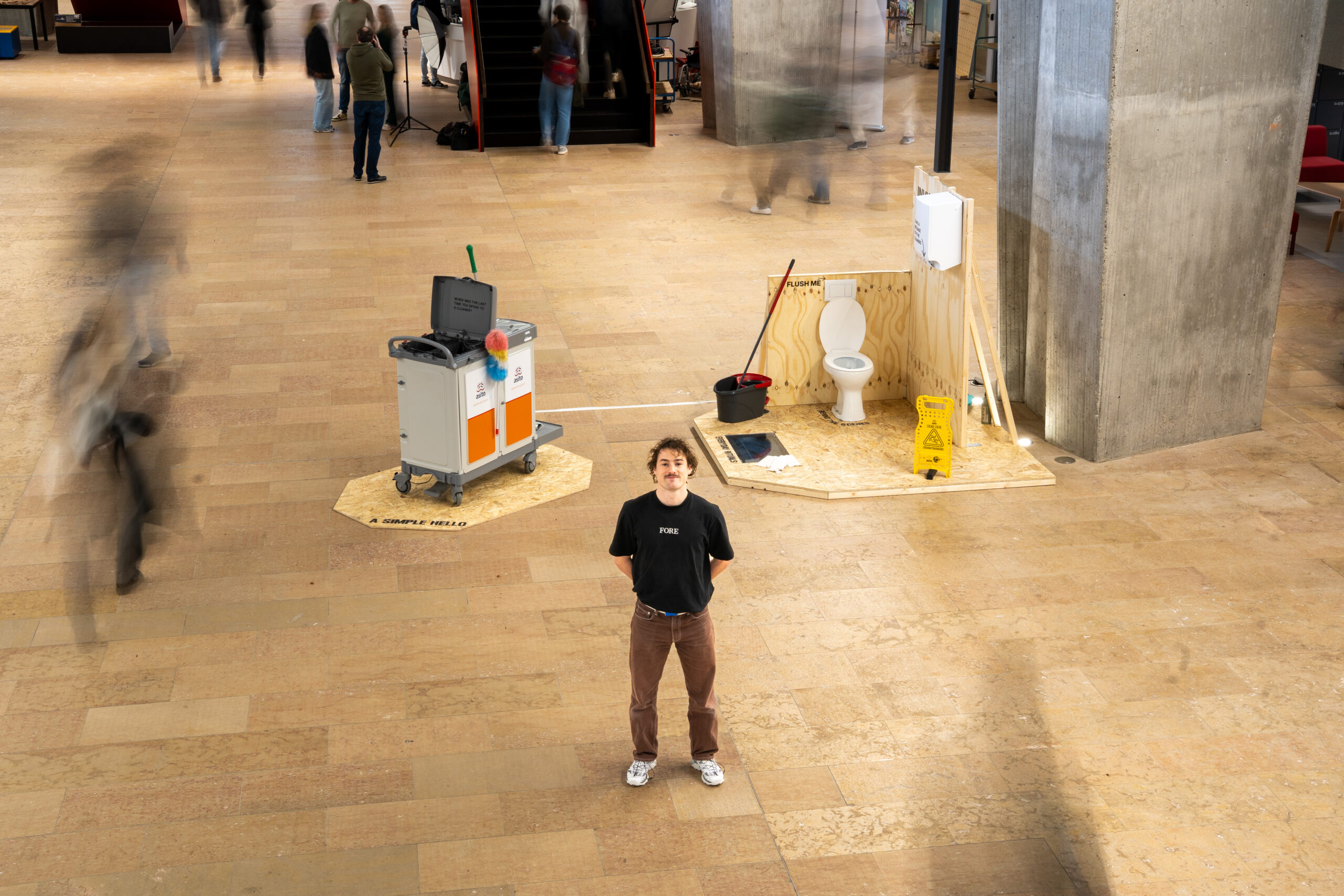
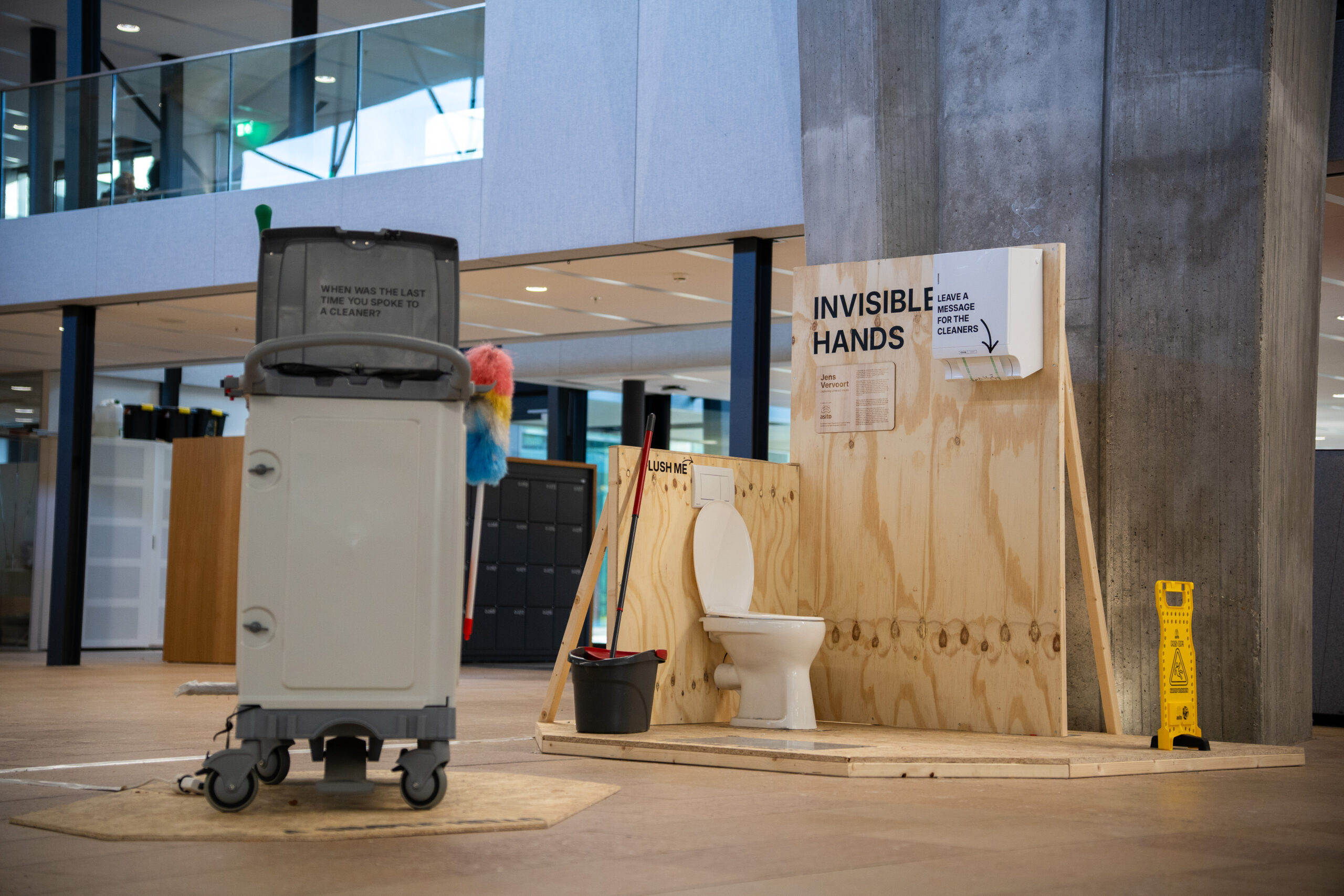
Creativity and Aesthetics play a key role in how I translate social insights into tangible experiences. Visual and sensory choices are grounded in user behavior and shaped through participatory methods such as bodystorming and collective brainstorming. In the project INVISIBLE HANDS I learened that these sessions allow different perspectives to influence how installations are formed, supporting accessibility and inclusion.
Film artefacts also plays an important role within my installations. By sequencing images and scenes, I make visible the role of cleaners and the scale at which they operate, helping audiences grasp both context and impact.
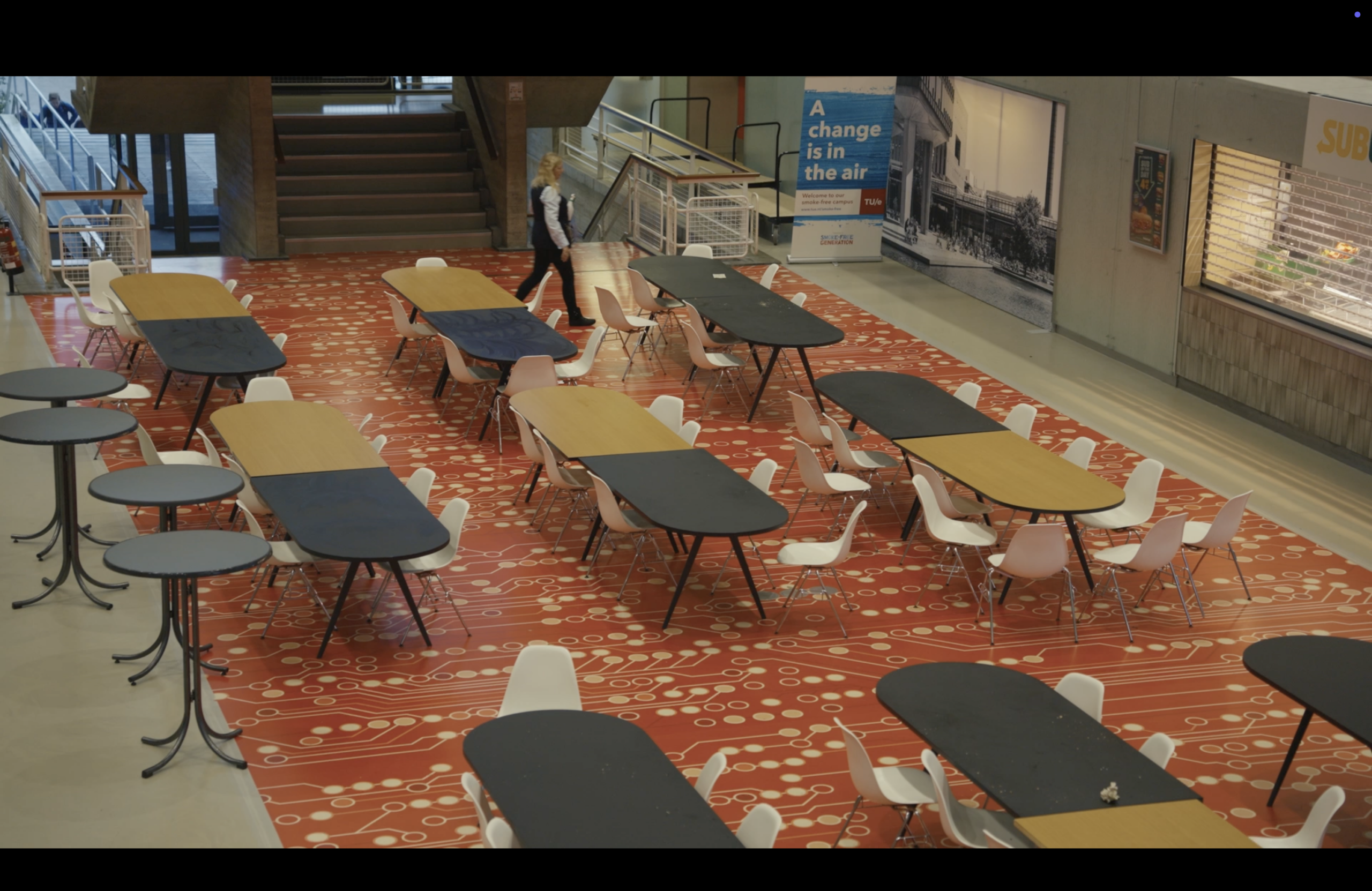
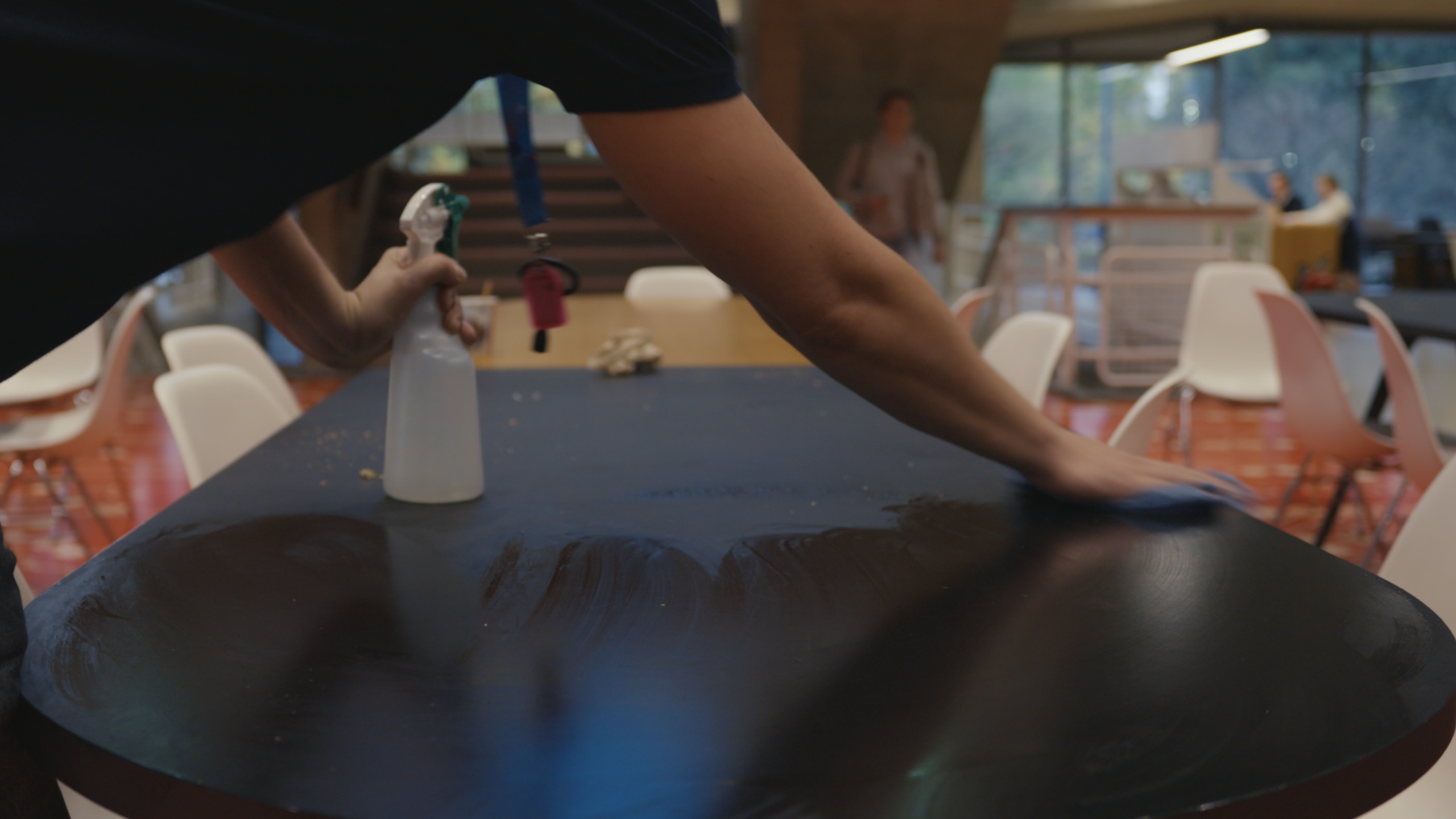
By placing these two shots side by side, I reveal the cleaner’s role in context showing how they perform many of the same actions, and how scale defines their work.
Technology and Realization
My focus on Technology and Realization allows me to prototype and realize these experiences myself. I work with tools such as TouchDesigner, Raspberry. PI, and physical prototyping techniques to build interactive installations and systems. This technical fluency enables me to move quickly from concept to experience and to iterate based on real world feedback.
During this process, I wanted to learn how larger, museum quality installations can be funded and designed to operate independently and withstand public use. This required a different approach to prototyping and material exploration, working at real life scale rather than small tests. To make this possible, I also had to apply my business skills, for example to secure funding and plan realistic production and maintenance strategies.
Business and Entrepreneurship
Business and Entrepreneurship connect my design practice to sustainable impact. During my Design Entrepreneurship I learned to approach business tools from a design perspective. Methods such as stakeholder mapping and user market fit help me position my work within organizations and municipalities. By working with real life cases, I developed strong stakeholder management skills and learned to navigate complex interests and expectations. Through conversations with experts and practitioners, I learned how to identify gaps in the market and use them to guide my design practice. I also gained experience in financial planning by realizing the INVISIBLE HANDS project and securing funding. In the Invisible Hands project, I succeeded in meeting both participatory and organizational goals, as reflected in the positive feedback from the client on the project’s approach and outcomes.
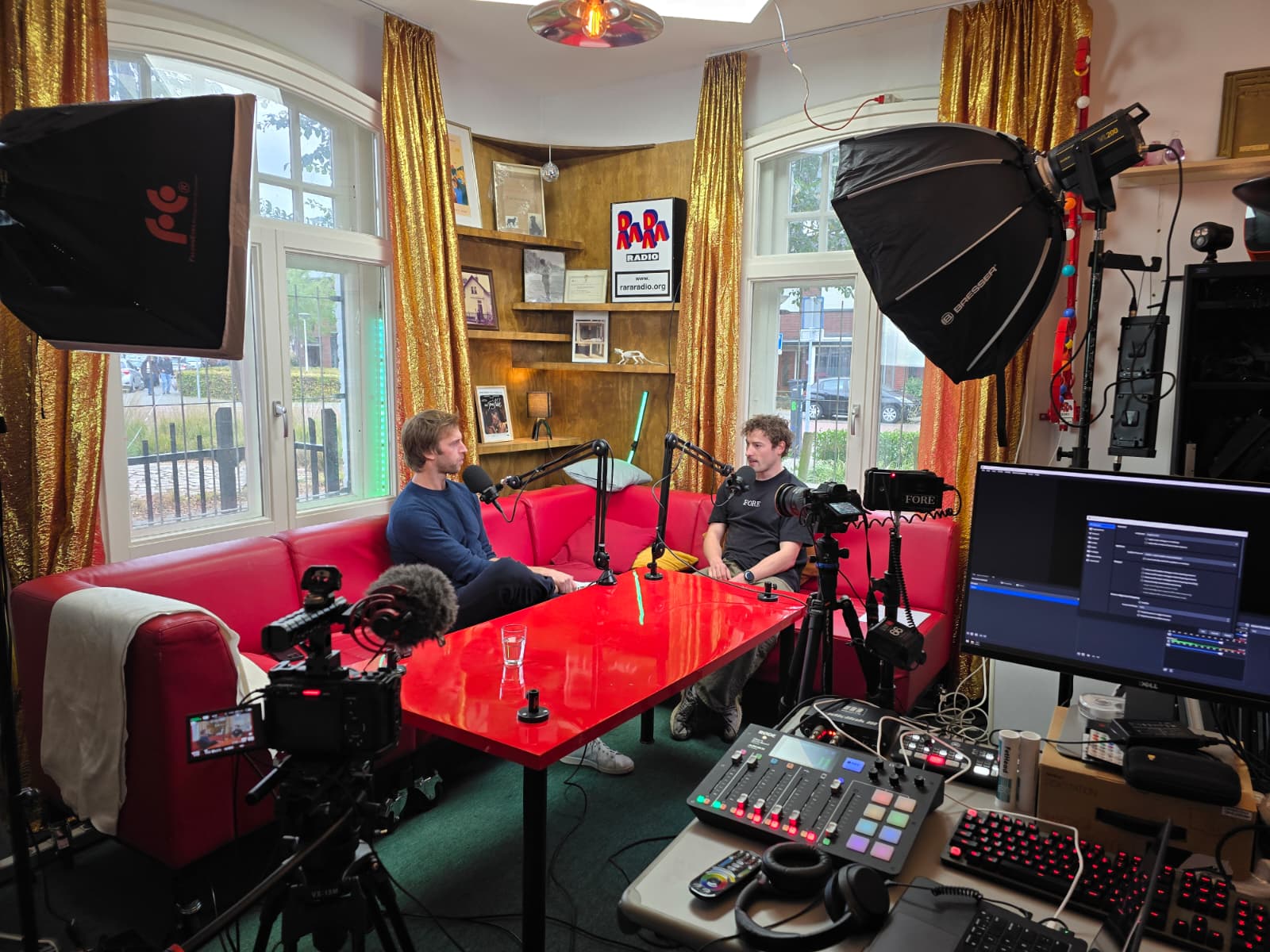
Expert interview with Wout van Wengerden. Recorded in a podcast studio and later used as a communication tool for my studio.
Math, Data and Computing
Within Math, Data, and Computing, I see quantitative data as a valuable addition to qualitative, user centered design processes. Especially in the context of interactive installations, quantitative feedback can support reflection on how people engage with an experience over time. Data can help evaluate whether an intervention works as intended and provide concrete feedback for iteration. This added layer is particularly relevant when communicating outcomes to organizations or municipalities, where insights need to be both experiential and accountable.
In my preparation project, this perspective was explored through the development of a video analysis tool built in Processing. The tool preselects video fragments based on visual characteristics, making it easier for designers and stakeholders to collaboratively edit and analyze material. Although no AI was used due to privacy considerations, the project explores how future, privacy aware AI systems could support thematic analysis while keeping human interpretation and context central.
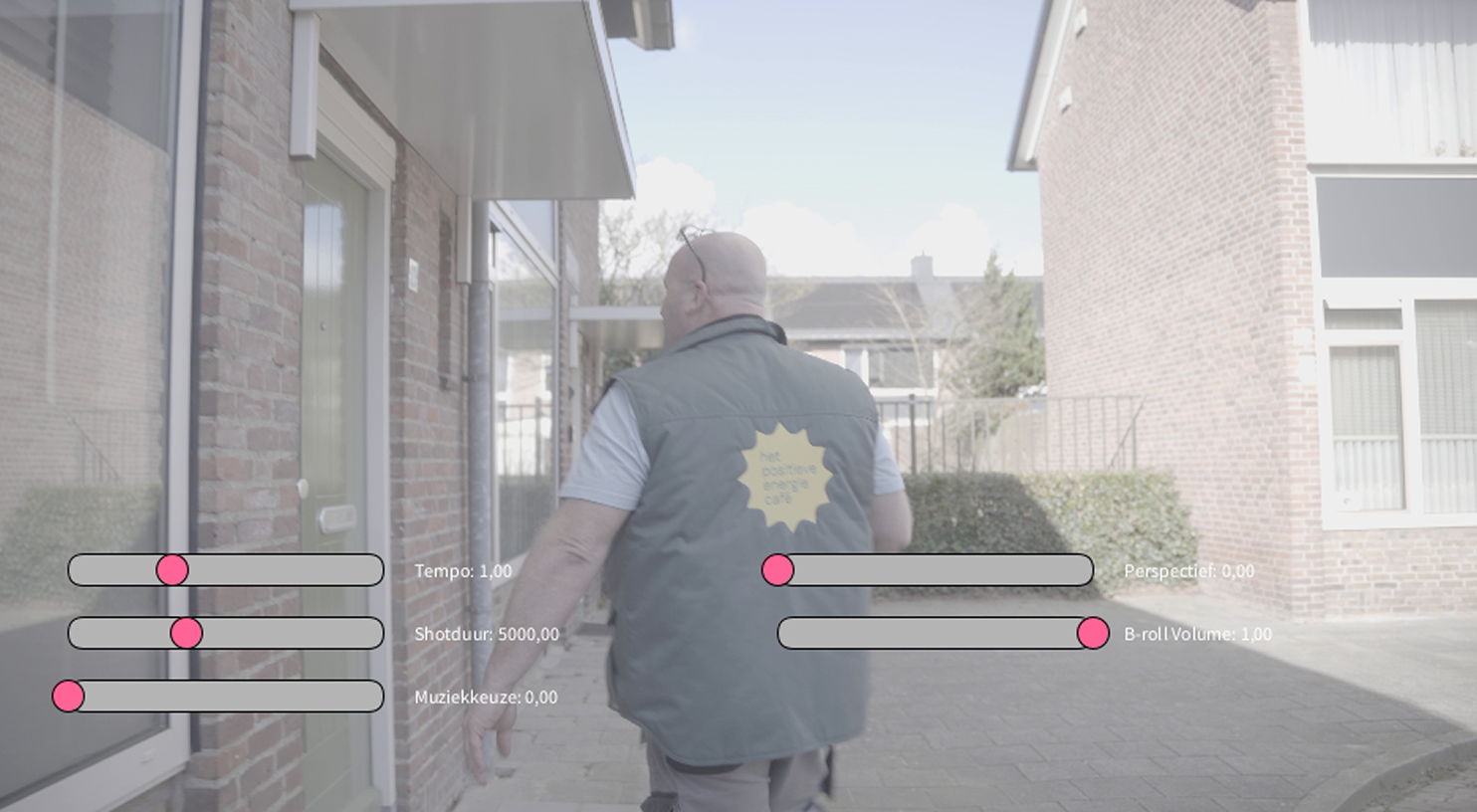
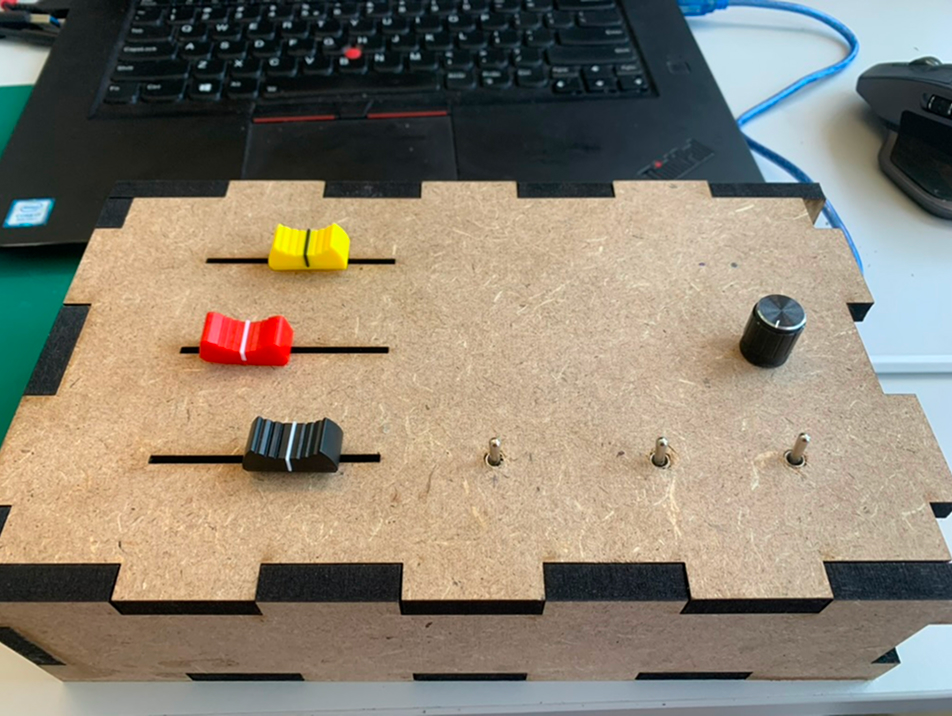
By changing parameters such as atmosphere, the system automatically selected and combined visual material, allowing users to shape the edit through interaction rather than technical expertise.
FUTURE
In the future, I aim to further develop my work at the intersection of social design and entrepreneurship. My goal is to create interventions that are meaningful for users while also being viable and valuable for organizations, municipalities, and cultural institutions. I want my work to function within real professional contexts, where design can actively support decision making, participation, and long term societal impact. I am particularly interested in developing film based design methodologies that can be embedded within organizations as ongoing participation practices.
A key challenge I want to address is reaching a broader audience for my installations, especially people who are less open to new perspectives. Through projects like Invisible Hands, I learned that accessibility and layering are crucial. By designing experiences that can be approached at different levels, it becomes possible to invite new viewers in and gradually open space for reflection and dialogue.
In this context, my ideal client would be a public organization working on themes that are often surrounded by taboo, such as migration or refugees. These contexts strongly align with my vision, as they offer the challenge of engaging people who hold firm opinions and creating space for refugee voices to be heard. Through installations in public space, I aim to bring these perspectives into everyday environments, encouraging encounter, reflection, and dialogue where these conversations rarely take place.